
For nine years I’ve been working almost exclusively with massage. Before that, I practiced as a traditional biokineticist, helping people strengthen and move better through exercise. These days, people book massages with me to relieve pain, tension, or chronic discomfort. Few can come once a week, but most can only come once every few weeks or even months. That’s understandable. Massage is a luxury for many, even when the results are life-changing.
Over the years, I’ve treated many people who suffer from migraines and tension headaches. And while migraines can be hormonal, dietary, inflammatory, stress-related, or muscular, the research and my own clinical experience suggest that a large portion of them have a muscular tension component, especially in the neck and shoulders.
That made me wonder:
What difference would it make if someone with chronic migraines received truly consistent, targeted massage. Not once a month, but several times in a short period, to really get ahead of the tension?
Why I Wanted to Explore This
Massage doesn’t only release muscle tension. It also influences the nervous system, circulation, and pain regulation. The problem is that most people don’t get to experience the compounding effect of regular massage, because it’s prohibitively expensive and, in my case, I’m usually booked two months in advance.
So, to explore this properly, I removed the money barrier. I worked with two friends who get migraines and offered to treat them for free, simply to see what would happen if we could be consistent.
This post isn’t a clinical trial. It’s an honest, real-world, anecdotal look at what happened.
Case 1: Monthly Massage Before Menstruation
One friend experiences migraines that are clearly linked to her menstrual cycle. Together, we decided to try a monthly massage in the week before her period, focusing on her neck and shoulders, the areas that tend to hold tension and can aggravate headache patterns.
She also receives these sessions for free. I’m mentioning that because it matters: a lot of women can’t afford to book preventative treatments like this every month. Removing the cost allowed us to test consistency.
Her results so far:
- Migraines have not disappeared, because her triggers are multi-factorial (hormones, food, stress).
- But she now has fewer migraines per month.
- When they do happen, they are often shorter in duration.
- She feels like she’s preventing them, not just reacting to them.
So, in her case, a pre-menstrual, targeted massage seems to be a helpful piece of a bigger management plan.
Case 2: Daily-Then-Fortnightly Massage
Another friend had a very different pattern. For two to three years he had been having debilitating migraines. Vomiting, out of action, can’t function. Interestingly, they often came on when he took a rest day. That meant he became anxious about resting, because rest = migraine.
He had tried many things over the years to get on top of the migraines. He played around with elimination diets, supplements, and made several lifestyle adjustments. One of the most helpful practices he added was weekly cold ocean immersions, which he has been doing for more than a year. The cold exposure made a noticeable difference to his stress levels, recovery, and overall wellbeing, but despite that, the migraines still kept coming, especially on rest days. And with massages happening only once a year, nothing had been consistent enough to make a lasting shift.
So in early September I suggested something different:
“What if I come every evening for a week (30 to 45 minutes) and we see what happens if we really go after the neck and trapezius tension?”
Because money and time were the barriers, we got creative. His wife kindly offered to make dinner for my kids at the same time, so I could come over at dinnertime, she could manage the children, and I could work in their spare room. That way, he got daily care, and I didn’t have to cancel my own family life.
I did this for five consecutive evenings (Monday to Friday) at the start of September. Since then, I’ve been seeing him every second week for a follow-up massage over dinner time. Still voluntarily, because I wanted to observe how long the effect would last.
What Happened
It’s now the middle of November, and he has had zero migraines since we started, the longest migraine-free stretch he’s had in years.
He has had an occasional headache, but none of them progressed to a migraine.
Because I was seeing him daily that first week, I was able to identify something I might have missed in once-off treatment: the tension was specifically coming from the left upper trapezius and referring up into the occipital area. There was also a small neural nodule at the base of the occiput. For about seven weeks it felt like the node wasn’t changing much in size, and then it began to reduce.
Interestingly, his neck and trap still feel tight to him. So we haven’t completely “fixed” the tissue, but we’ve disrupted the migraine pattern.
Once he understood that this muscle was the main culprit, he started doing something very simple at home: heat on the neck every evening while watching TV. Because the problem had been clearly identified, the self-care suddenly felt worth it.
About six weeks in, I referred him to a chiropractor for adjustments and dry needling. That has supported what we started with the massage.
Another helpful part of seeing him regularly was that once it was clear the left trapezius was the main driver, we could start asking the next question: why is this muscle getting so tight in the first place? Through conversation, it dawned on him that his desk setup required him to constantly turn over his left shoulder whenever someone came to speak to him, something that happens every few minutes in his job. That repeated rotation made perfect sense as a contributing factor. He has since adjusted his desk, and I’ve given him one simple strengthening exercise to add to his routine so the muscle can cope better. These small changes only became obvious once we knew exactly which muscle was involved.
Key Observations
- Intensity matters. The daily sessions created a breakthrough that ad-hoc massages never achieved.
- Regularity maintains the gains. The every-second-week sessions have helped to keep him migraine-free.
- Specificity helps adherence. Once we knew it was the left trapezius, he was happy to do heat therapy every night.
- Multimodal care works best. Massage + heat + chiropractic/dry needling seemed to work together.
- Accessibility is a real barrier. Both of these friends were treated for free. If they had to pay full price weekly, we would never have seen this outcome.
What I Expected vs. What Happened
My hypothesis was not that we would eliminate migraines. My goal was simply to reduce the number of migraine days per month.
So to see two and a half months with zero migraines was surprising, in the best way.
This is not a controlled study, and I am not claiming that massage alone “cured” his migraines. Migraines are complex. But this case does suggest that for some people, short, frequent, targeted massage periods may be far more effective than the typical “when I can afford it” model.
Why This Matters
Migraine sufferers are often told to manage stress, change diet, and take medication, which are all valid. But the muscular component is sometimes overlooked, especially when the person presents with obvious tension in the neck and shoulders.
This little real-world experiment tells me:
- Some migraine patterns are highly responsive to muscular release.
- The frequency of treatment may be the missing piece.
- We need more accessible ways for people to receive consistent, preventative care.
Next Steps
I’ll keep tracking his progress, especially over December and January when routines, sleep, and stress levels usually change. If he stays migraine-free, I’d like to put this together as a small observational piece on the role of intensive, short-term massage for migraines.
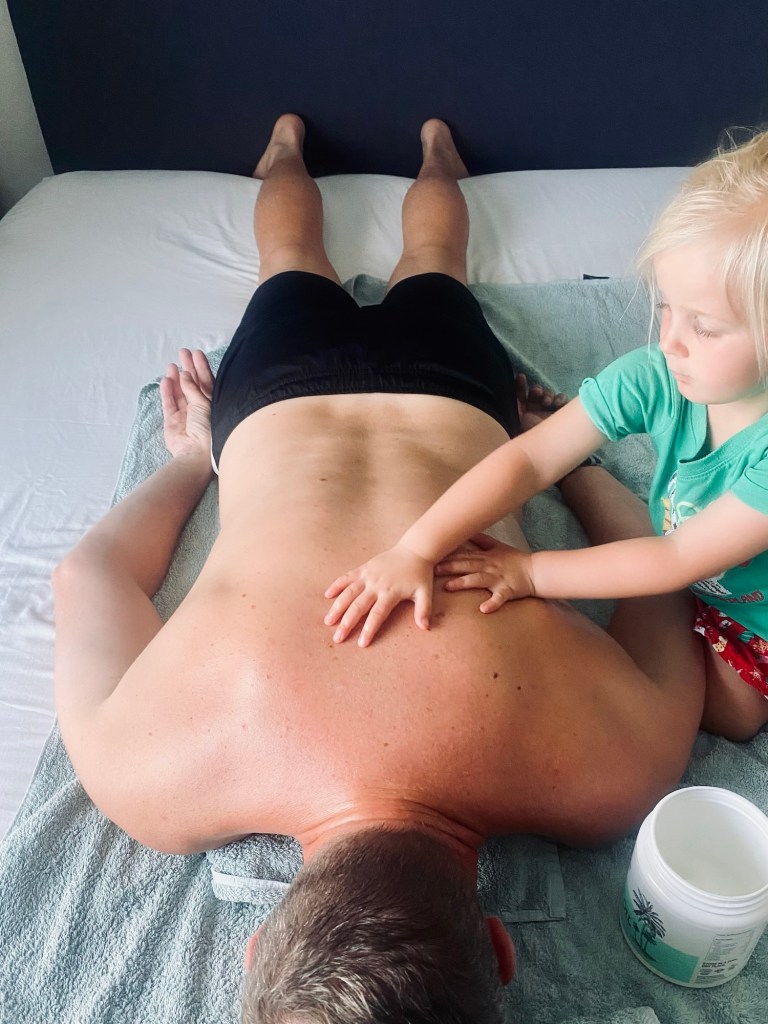
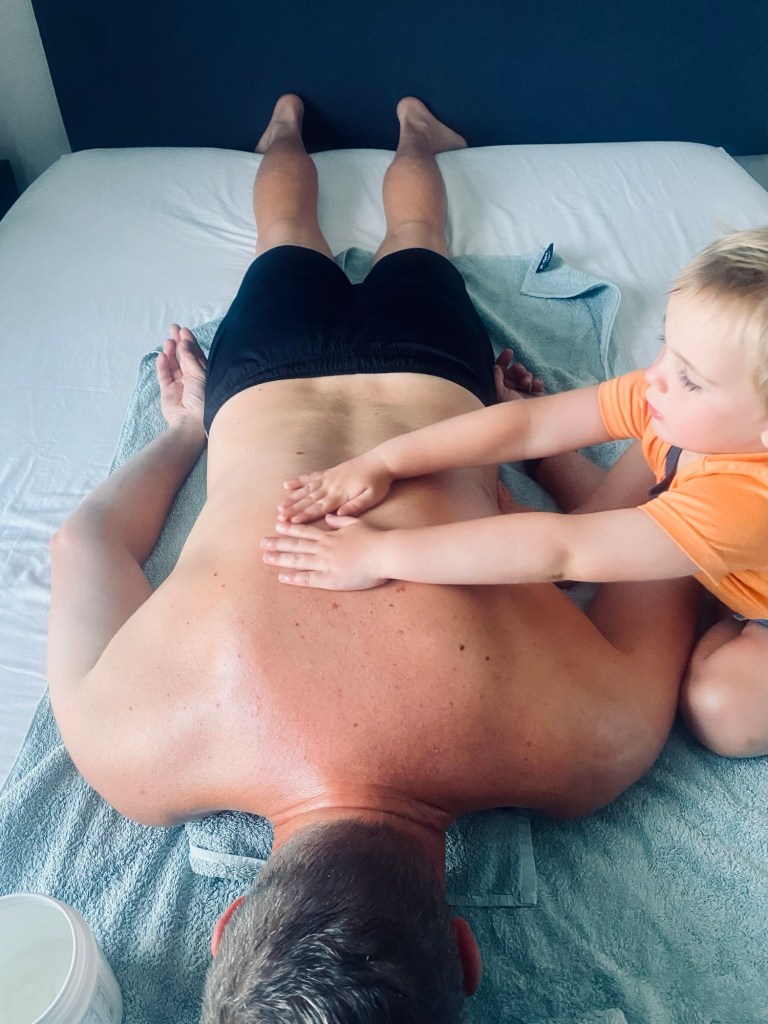
For now, I hope this encourages practitioners, clients, and migraine sufferers to think a little differently about massage: sometimes it’s not the one good massage, it’s the enough good massages, and maybe it’s even just a committed partner of friend who could work on the area daily for a while if finance and time are major limitations. Even an amateur can make a difference, I’m certain.
About Me
I’m a Cape Town-based biokineticist and massage therapist working under the Social Wellness banner. A large part of my work goes toward supporting community projects and trauma recovery homes, so whenever I can offer treatment for free to explore what’s possible for people in pain, I do.


 Social Wellness
Leave a comment